Print on demand across the border: where it is made matters more than where it ships from
A shirt sewn in Honduras and printed in North Carolina is usually still a Honduran shirt at the border. Why origin decides duty, CUSMA and tariffs, and where to find it for your products.
By the Othermile team
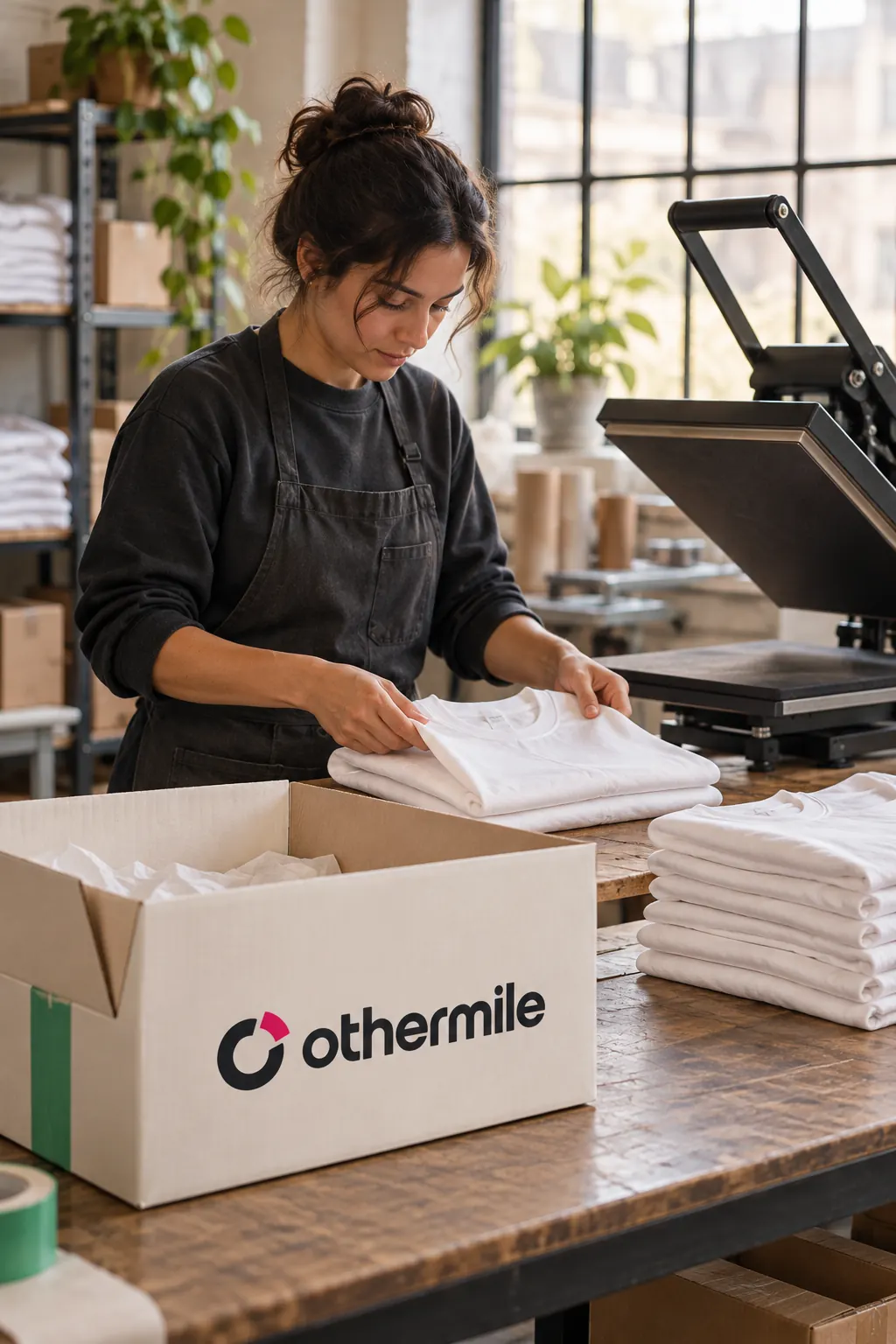
With print on demand, a shirt can be sewn in one country, printed in another and shipped from a third. For the border, one of those countries matters more than the others: where the product was made. It decides the duty rate, whether a CUSMA claim is possible, and whether a tariff or surtax aimed at one country applies.
Made in is not the same as ships from
Customs asks where goods were made, not where the parcel started its trip. A blank shirt sewn in Honduras and printed in North Carolina is, for most customs purposes, still a shirt made in Honduras. Printing or packing a product usually does not change where it was made; sewing a garment together usually does.
That surprises a lot of print on demand sellers, because their orders say they shipped from the US.
Why it matters at the border
- Duty rates follow the origin. Clothing that does not qualify for CUSMA pays duty of up to 18% entering Canada.
- CUSMA needs North American origin. Goods only enter without duty under CUSMA when they qualify as made in Canada, the US or Mexico under the agreement's rule for that product.
- Tariffs and surtaxes target countries. When Canada or the US puts an extra charge on goods from a particular country, it is the origin that counts.
The shipping country still matters for some things, such as the low value allowances for courier parcels into Canada. Where it was made decides the rest.
Where to find the origin of your products
- Your print provider's catalogue. Printify and Printful list the brand and model of each blank. Most brands publish where each model is made.
- The product label. A sample order is the quickest check.
- Your supplier. If you buy your own blanks, ask for the country of origin in writing.
When a model is made in several countries, note the one your provider usually stocks, and check again when you switch providers or colours.
Set it once per product
Record the tariff code and the country of origin for every product you sell across the border. Othermile keeps both in your product list, suggests a code when it can, and holds orders for products that still need one, so nothing ships on a guess.
Check one now
Pick a product in the free checker, choose where it was made, and compare the result with a CUSMA claim and without one. The T shirt guide for Ontario shows the difference for common order values.
This guide explains public rules in plain language for general information. It is not customs, tax or legal advice; the exact tariff code, your paperwork and the carrier decide the final amount.
Keep reading

DDP or DAP: who should pay the border charges on your orders
Every order that crosses the border is shipped on one of two terms: the customer pays on arrival, or the store pays up front. How each works, what DDU really means, and how to choose.
What your Canadian customers pay at the door, and why
Duty, sales tax and a handling fee can turn a C$45 order into a C$57 surprise. Here is what the charge is made of, why mail and courier differ so much, and four ways to stop it.
Shipping from Canada to the US now that small parcels pay duty
Since August 29, 2025, parcels worth US$800 or less no longer enter the US without duty. What changed for Canadian sellers, how CUSMA helps, and what to do about it.